Heritage isn’t enough: what really wins the order?
Our National Sales Manager Ash Pearson looks beyond appearance to explore what makes a heritage aluminium door commercially competitive, from security and thermal performance to fabrication and price.
Heritage design has an obvious appeal. It brings character and a sense of history to a building, whether that’s a traditional property or a contemporary home borrowing from the past. But in a market where customers have more products to compare, a familiar aesthetic is only the starting point.
At Jack Aluminium, we know that choosing the right heritage aluminium doors involves much more than getting the appearance right. Security, thermal performance, ease of fabrication and overall cost all have a part to play.
Our National Sales Manager, Ash Pearson, has spent years working closely with fabricators and understanding what matters when it comes to choosing the right system. Here, we look at why the strongest proposition isn’t necessarily the one with the most impressive headline specification, but the one that brings the whole package together.
The conversation around improving existing buildings continues to develop, too. In June 2026, Historic England published research examining the carbon payback of retrofit measures across five traditional building types, representing around 74% of England’s pre-1919 housing stock. Its findings showed that, in the scenarios modelled, the embodied carbon associated with the measures was paid back through operational savings within a relatively short period.
While the research focuses on improving the energy efficiency of traditional buildings rather than heritage-style products specifically, it highlights a wider challenge for the built environment: balancing performance and environmental considerations with the character people want to retain.
For manufacturers of heritage-style doors, that balance has a very practical dimension. A product can look right on a drawing, but it must also meet the project’s performance requirements, satisfy security expectations and make commercial sense for the businesses specifying, fabricating and installing it.
Beyond the U-value
Thermal performance is an important part of the conversation, and rightly so. But focusing on a single U-value risks overlooking the wider considerations that determine whether an aluminium door system is right for a particular project.
Specifiers need to understand how a door performs against the requirements of the building, including the relevant thermal and security criteria. Fabricators, meanwhile, have to consider how the system goes together, the hardware and locking arrangements, manufacturing processes and the time involved in producing a finished door.
These factors are connected. A specification that looks attractive on paper still needs to translate into a product that can be manufactured consistently, supplied at the right price and delivered with confidence.
That’s why comparisons between heritage aluminium door systems need to go beyond headline figures. A lower U-value may be an advantage, but it doesn’t automatically make one system the best choice for every application. The real question is how well the complete package meets the needs of the project and the businesses delivering it.
Making the whole package work
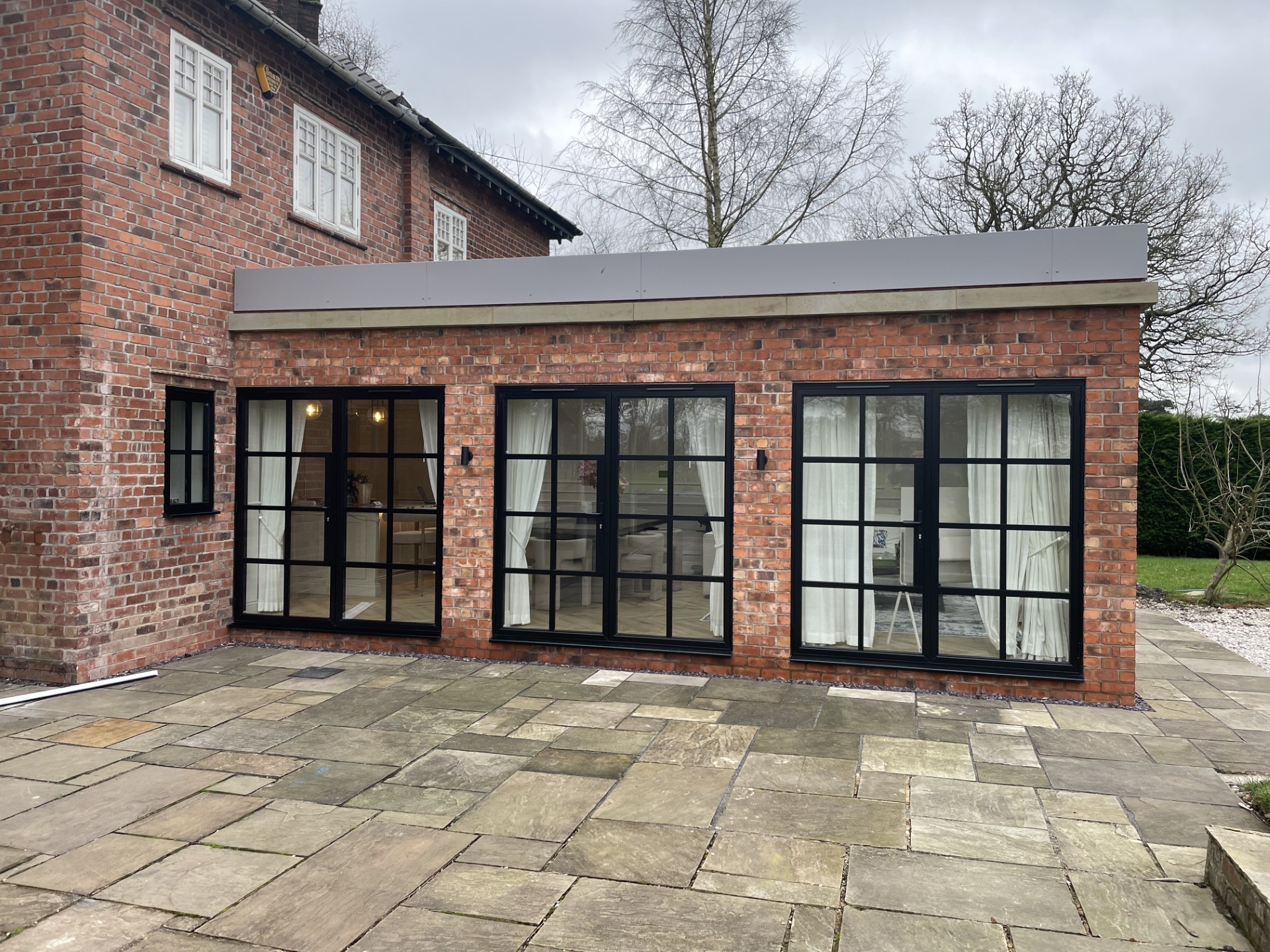
Our SD70 Heritage aluminium door is a good example of why this broader assessment matters. As with any heritage-style system, the appeal lies in achieving the right appearance, but that’s only one part of its value.
Thermal performance needs to be considered alongside security, including the requirements of PAS 24 where applicable, as well as the practicalities of fabrication, overall cost and the support available from the systems supplier.
For fabricators, ease of manufacture is particularly important. A system needs to work in the factory as well as on site, with practical hardware and locking arrangements that support efficient production without compromising the finished product.
For specifiers, confidence comes from understanding how those practical considerations sit alongside the required performance and compliance criteria.
Price matters, too. The cheapest option isn’t necessarily the most commercially attractive once manufacturing time, project requirements and the level of supplier support are taken into account. Equally, paying more for a particular performance figure only makes sense if that additional performance is needed and brings a meaningful benefit to the application.
The strongest proposition is therefore not necessarily the door that leads on one specification point. It’s the one that brings the right combination of design, performance, security, manufacturability and commercial value together.
The role of the systems supplier
This is where the relationship between a systems house and its customers becomes important.
At Jack Aluminium, we believe customers need more than a product catalogue. They need clear technical information, straightforward communication and practical support when working through the requirements of a project.
That support can help establish whether a system is suitable for the intended application, identify relevant performance and compliance requirements early, and avoid unnecessary complications further down the line.
Understanding these pressures is just as important as developing products that meet the brief. The market is competitive, and our customers have to make decisions that work both technically and commercially. Listening to those needs and responding with practical solutions is an important part of building lasting relationships.
Looking beyond appearance
Heritage aluminium doors are expected to deliver on several fronts at once. They need to capture the look that makes them desirable, meet the performance and security requirements of the project, and offer a viable proposition for the businesses involved in getting them made and installed.
There will always be applications where a particular specification takes priority. But treating one figure as the whole story risks missing what makes a system genuinely competitive.
Ultimately, we believe the best choice is the one that brings the right elements together for the project. For fabricators and specifiers alike, that means looking beyond the appearance – and beyond the headline numbers – to understand the value of the complete system.
If you’re considering a heritage-style aluminium door system for an upcoming project, speak to our team about the SD70 Heritage and the options available.
Follow us
Subscribe for the latest updates, product launches and industry insights.
Why Jack Aluminium
Jack Aluminium is an independent UK aluminium systems house focused on designing practical and reliable glazing systems.
We work closely with fabricators, installers and specifiers to develop products that perform consistently across real projects, from design through to installation.
Read our story